

The Daily Grind: More Than Just Refractions
We've all been there on a busy Saturday, haven't we? The waiting room is full, the phone's ringing off the hook, and you're trying to decipher Dr. Smith's latest masterpiece of a handwritten prescription. Running an optical practice, whether it's a single shop or a small chain, is a constant balancing act. It’s not just about getting the Rx right; it’s about managing everything behind the scenes that keeps us ticking.
From chasing down a specific frame to dealing with another lab remake, these everyday challenges can really eat into our time and, let's be honest, our bottom line. We work hard to provide excellent patient care, but sometimes the operational side feels like it's fighting against us. Let’s talk about some of the big ones and how we can approach them.
Untangling Multi-Store Inventory Headaches
If you're managing more than one location, you know the pain of frame inventory. You get a call from Branch 2 asking if you have that popular XYZ frame in stock, and you spend ten minutes rummaging around, only to find it's out. Meanwhile, Branch 1 has six of them gathering dust. This "SKU drift" isn't just annoying; it costs us real money.
Studies show independent chains can lose 8-14% of gross revenue because of inventory misalignment. That's a huge chunk! We end up with bestsellers out of stock in one store while another has dead stock sitting on the shelves. It makes unified purchasing a nightmare and inter-branch transfers a manual chore.
Imagine knowing exactly what's where, at a glance, across all your stores. No more frantic phone calls or guessing games. Just a clear picture of your stock, allowing you to move frames where they're needed or place smart reorders.

Cutting Down on Costly Lab Remakes and Transcription Errors
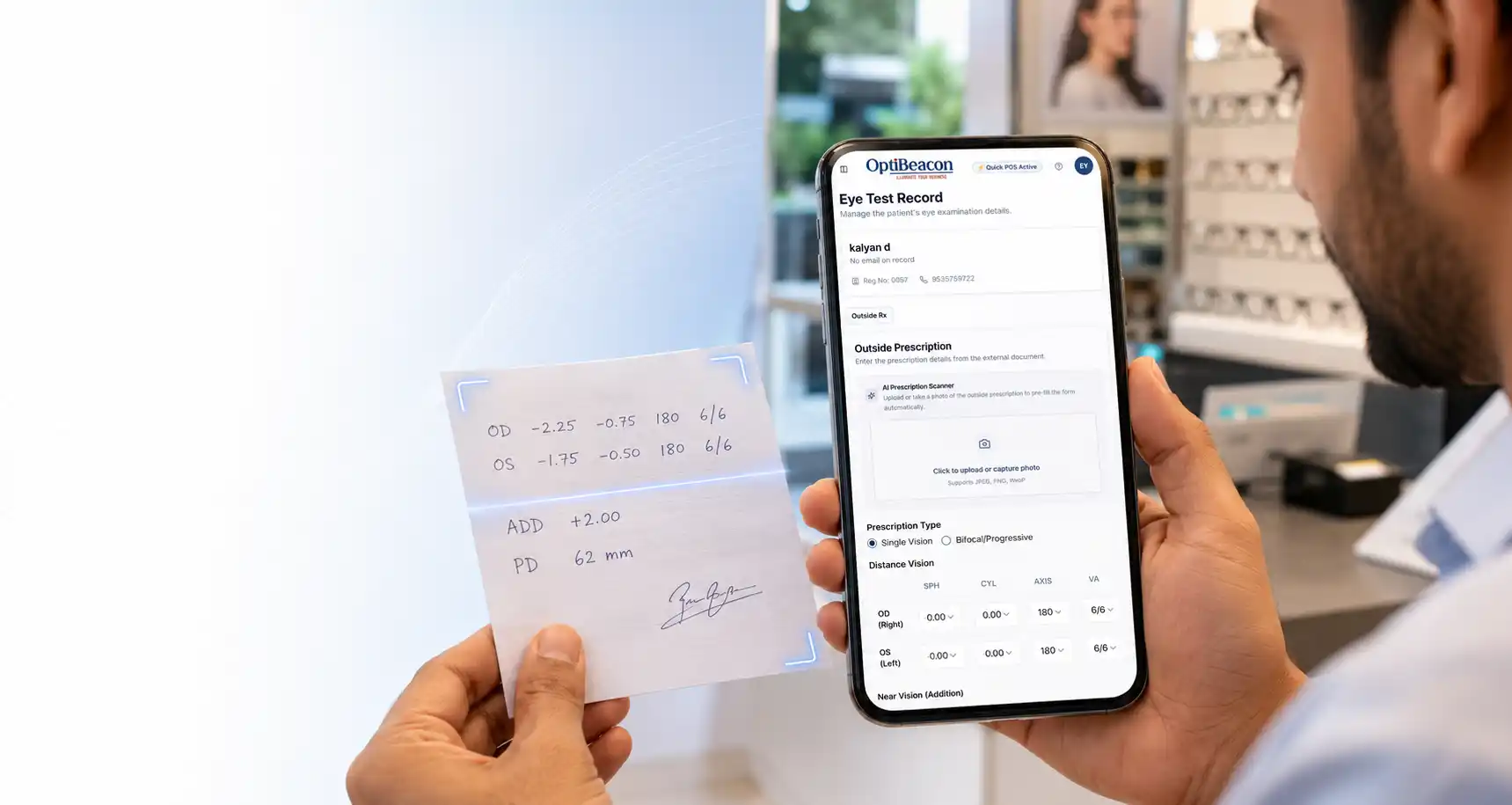
This is a big one for every optician and lab owner. How many times have you or your team spent 4-6 minutes per patient trying to manually retype a doctor's handwritten prescription into your system, or worse, into the lab's portal? It’s a tedious task, and frankly, it's a prime spot for mistakes.
Those small transcription errors – a misplaced decimal, a swapped axis, a misread add power – add up. They account for over 22% of optical lab remake requests. Think about that: almost a quarter of remakes could be avoided if we just got the Rx details right the first time. That's not only frustrating for the patient who has to wait longer but also for us, eating into our profit margins and tying up our lab's resources.
Getting it wrong means more than just a remake. It's wasted lens material, lost lab time, and a potential dip in patient satisfaction. Finding a way to capture those prescription values accurately and instantly, right from the source, is a decisive advantage for reducing these hidden costs.
Navigating the Insurance Claim Maze
And then there's insurance. Who hasn't experienced the joy of a rejected claim because of a mismatched ICD-10 code or a V-code billing discrepancy for specialty lenses? It feels like a constant battle to keep up with the ever-changing rules and specific coding requirements for progressives or anti-reflective coatings.
Many of us are still using older software that doesn't "scrub" claims before sending them off. This means we're often finding out about errors only after the claim has been denied, leading to more paperwork, phone calls, and delayed payments. Streamlining this process isn't just about saving time; it's about ensuring steady cash flow and reducing administrative overhead.
Bringing It All Together
These challenges—inventory management, prescription accuracy, and claims processing—aren't isolated issues. They're interconnected parts of our daily operations. When one area struggles, it often creates ripple effects throughout the entire practice. The good news is, we're not alone in facing them, and there are practical ways to tackle them head-on.
Thinking about how we manage these core areas can free up our team to do what they do best: provide exceptional patient care and grow our practices. It's about working smarter, not just harder, to make our optical lives a little less hectic and a lot more profitable.
Frequently Asked Operational Questions
How can I reduce frame dead stock in my practice?
Regularly audit your inventory across all locations. Use a system that provides real-time data on sales and stock levels. This helps you identify slow-moving frames and transfer them to busier branches or mark them down before they become dead stock.
What's the best way to prevent prescription transcription errors?
Implement a digital solution that can automatically capture and digitize prescription values directly from the doctor's Rx. This eliminates manual retyping, drastically reduces human error, and ensures accuracy before sending orders to the lab.